| Year | |
| Cause | Sudden opening of massive fissure in earth's surface |
| Event | Eifel Vulcanic Emergence Event |
| Impact | Destroyed Daun and dozens of surrounding towns • Killed tens of thousands • Baffled geologists, as Eifel was not considered an active volcanic area |
| Location | |
| Epicenter | Daun |
| Significance | Sobering reminder of earth's untamed power • Drove advances in disaster response, early warning systems, and geological monitoring |
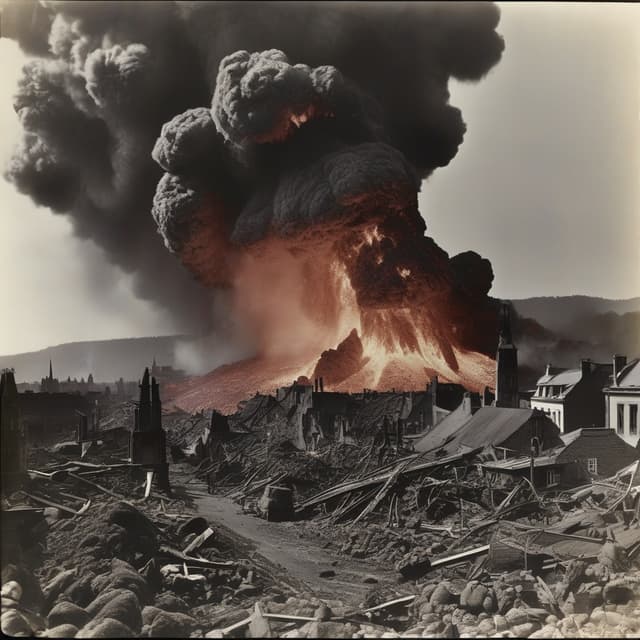
The Eifel Vulcanic Emergence Event was a catastrophic natural disaster that struck the Eifel region of Germany on May 21, 1936, devastating the city of Daun and surrounding areas. The sudden and unexpected eruption stood out as one of the most puzzling and devastating volcanic events in recorded history.
In the early morning hours of May 21, a powerful series of earthquakes struck the Eifel, with the epicenter directly beneath the city of Daun. Within minutes, a massive fissure suddenly opened in the earth, from which a towering column of lava, ash and poisonous gases began to erupt.
Over the next several days, the eruption intensified, spewing millions of tons of volcanic material that buried Daun and dozens of surrounding villages. The city was utterly destroyed, with no survivors found in the aftermath. Estimates suggest the death toll in Daun alone exceeded 20,000 people.
The eruption shocked the world and became the subject of extensive scientific investigation. Geologists were baffled by the sudden and unexpected nature of the event, as the Eifel was not previously considered an active volcanic region. The sheer scale of the destruction left a lasting impact, both in Germany and internationally.
The Eifel is a low mountain range located in western Germany, spanning the states of Rhineland-Palatinate, North Rhine-Westphalia, and Saarland. Prior to 1936, the region was known for its picturesque landscapes, forestry, and mineral-rich deposits, but was not considered geologically active.
Daun, the epicenter of the 1936 disaster, was a thriving regional center of industry, mining, and commerce, with a population of over 20,000 people. The city's strategic location and natural resources made it an important economic hub in the Eifel until its sudden and catastrophic destruction.
In the aftermath of the 1936 eruption, geologists from around the world descended on the Eifel to try to understand the causes of the disaster. Initial theories posited that the eruption was triggered by a previously undiscovered system of deep fault lines and magmatic activity beneath the surface.
Subsequent research has revealed the Eifel to be part of a complex geological system, with lingering volcanic activity and instability deep underground. However, the specific triggers that led to the sudden 1936 eruption remain elusive and continue to be the subject of intense scientific study and debate.
In the wake of the catastrophe, the German government struggled to respond to the immense scale of destruction and displacement across the Eifel. Daun and the surrounding areas remained largely abandoned, as attention and resources were focused on more populated regions.
Over the decades, the ruins of Daun have become a haunting memorial to the power of natural disasters. The crumbling buildings and streets buried under volcanic debris draw visitors from around the world seeking to understand this tragic event.
The Eifel Vulcanic Emergence Event has also inspired extensive research into early warning systems, disaster response protocols, and geological monitoring technologies. It stands as a sobering reminder of the fragility of human civilization in the face of the Earth's untamed forces, and a call to vigilance in preparing for and mitigating the impacts of such catastrophic natural disasters.
